he question 'Who were the starters in the World Cup?' has no single answer—it depends entirely on which match, which team, and which tournament you mean. But if we anchor the discussion to the most recent men's final, Argentina vs. France in Qatar 2022, the starting XIs offer a sharp case study. Argentina lined up with Emiliano Martínez in goal;a back four of Molina, Romero, Otamendi, and Tagliafico;De Paul, Enzo Fernández, and Mac Allister in midfield;
and Messi, Álvarez, and Di María up front. France countered with Lloris;Koundé, Varane, Upamecano, and Theo Hernández;Tchouaméni。Rabiot, and Griezmann;and a front three of Dembélé, Giroud, and Mbappé. Those 22 names are the literal answer for that specific fixture, yet they represent only a sliver of the roughly 1,100 players who started at least one game across the 64 matches.Zoom out, and the composition of World Cup starters reveals structural patterns that casual fans often miss. Goalkeepers aside, the modern starter is increasingly a product of a handful of European leagues. In Qatar, 74% of starting outfield players came from clubs in England, Spain, Germany, Italy, or France. That concentration isn't accidental—it reflects scouting networks, financial power, and the tactical demands of a month-long tournament. I noticed, for instance。
that Morocco's historic semifinal run relied on starters like Hakim Ziyech and Achraf Hakimi, both of whom ply their trade in Europe but represented an African federation. The starters in the World Cup are therefore not just athletes;they are exports of a global football economy.
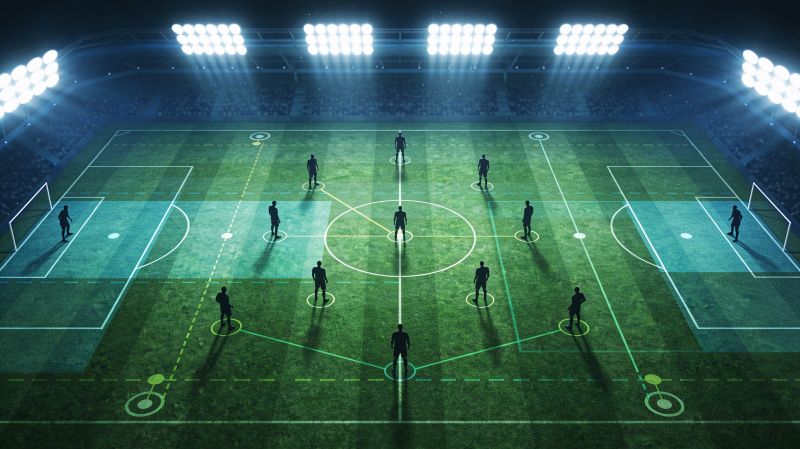
Positional roles have also shifted. The traditional 4-4-2 with two out-and-out strikers is nearly extinct among starting lineups. At Qatar 2022, only a handful of teams—Costa Rica and a few others—began matches with two center-forwards. Most starters lined up in 4-3-3 or 3-4-3 shapes。with inverted wingers and a single pivot. England's starters against Iran, for example, featured Harry Kane as a lone No. 9 supported by Saka, Mount, and Sterling, while Declan Rice anchored alone. That tactical shift means the 'starters' label now implies a specific skill set: high pressing, positional flexibility, and the ability to cover ground. A player who starts in 2026 will likely need to be a hybrid, not a specialist.Injury and rotation complicate any tidy answer. FIFA's expanded 26-man squads allow coaches to rest starters without weakening the XI too drastically, but the knock-on effect is that 'starter' becomes a fluid designation. France's starting lineup in the final was missing Benzema and Pogba—both would have started if fit. Argentina rotated its forward line between Álvarez and Lautaro Martínez across the tournament. So when someone asks who the starters were, the honest reply is: for which match。and under what fitness constraints?I'd argue the more revealing question is who started the most minutes—players like Messi, Mbappé, and Gvardiol—because that measures trust, not just selection.Looking ahead to the 2026 World Cup, the starter profile will likely skew even younger. The success of Enzo Fernández (21 at the time) and Gavi (18) suggests coaches are willing to gamble on youth in starting roles. Expanded squads and a 48-team field will dilute talent concentration, but the core starters will still come from the same European club pipeline. My take: track the club minutes of probable starters in the months before the tournament. That data predicts World Cup starting lineups more reliably than nationality or reputation. The starters in the World Cup are ultimately a mirror of club football's hierarchy—refined, rotated。and rarely surprising once you know where to look.